How to Get Car Insurance Quotes for Young Drivers
Quote your young driver both ways, on your policy and on their own, before deciding which actually costs less.

What to have ready before you request quotes
- Each car's actual use Decide which car your young driver actually drives, even occasionally. Quotes change a lot depending on whether they're listed as an occasional driver on a parent's car or the primary driver on their own.
- Driving record and license date Pull the exact date they were licensed and any tickets or claims in their name. Every quote will ask for this, and getting it wrong changes the price you're quoted.
- Full-time student status Know whether they're enrolled full-time and where they'll be living during the school year. Many insurers price this differently, and it affects whether they should stay on your policy at all.
- A quote for both scenarios Ask for a quote with them on your policy and a separate one for a standalone policy in their name. You can't compare the real cost of either option without seeing both side by side.
- Current policy details Have your declarations page open, showing your deductibles, limits, and who's currently listed as a driver. Quoting tools need this to give you an accurate comparison instead of a rough guess.

A parent quoting for a daughter back from her first year away
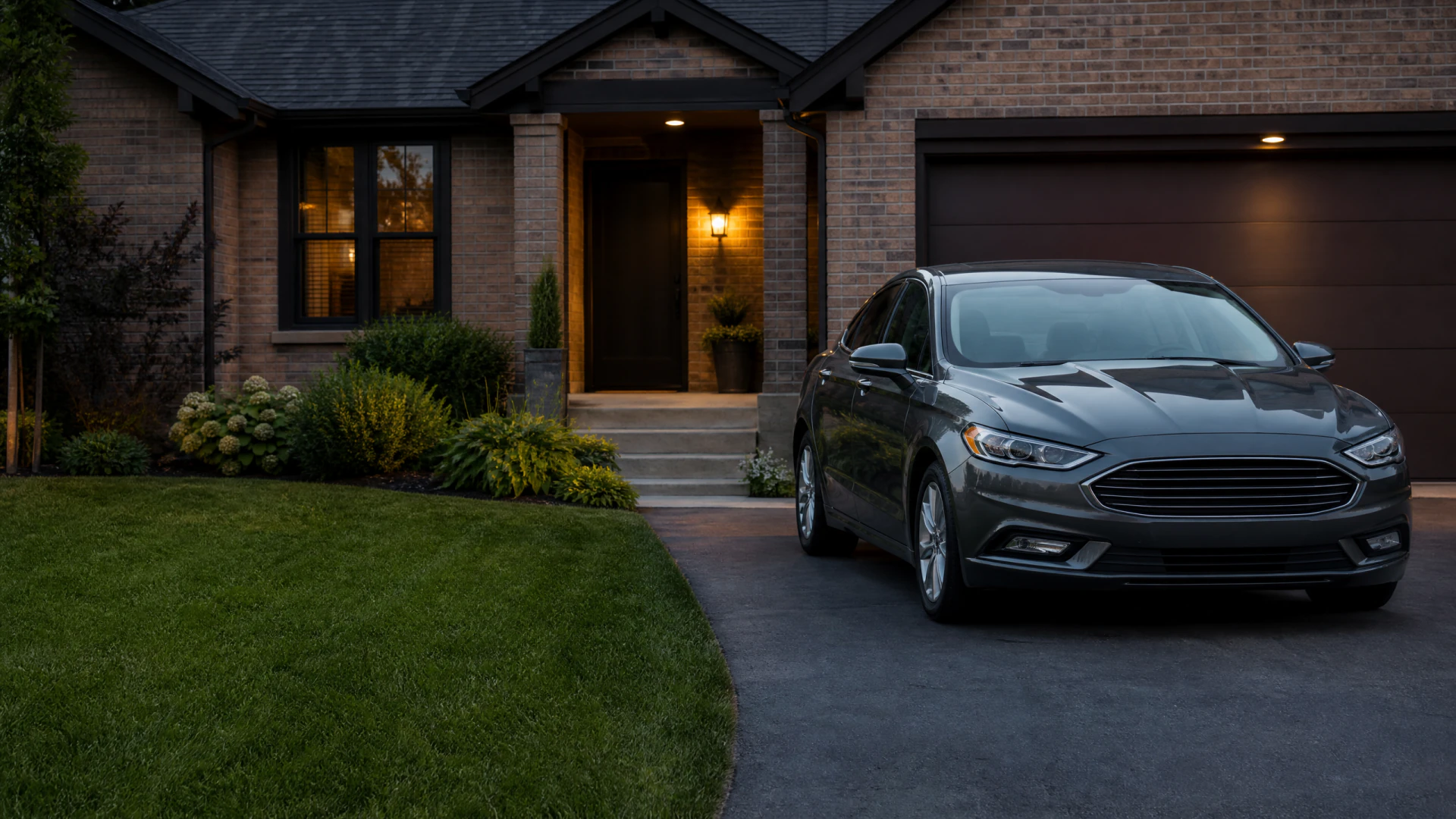
Her daughter had been licensed for two years and spent freshman year at a school four hours away without a car. She came home for the summer and started driving the older sedan sitting in the driveway. The parent wasn't sure if she needed to be added back on as a full-time driver or if there was a lighter option for a few months of summer driving.
She got a quote with her daughter listed as an occasional driver on the sedan, and a second quote treating her as a regular driver for the summer months. The gap between the two wasn't small, but the occasional driver option fit what was actually happening, since her daughter had no car of her own at school and wasn't driving daily back home either. She went with that option, made a note to revisit it before the fall semester, and confirmed with the insurer what would happen if her daughter brought the car back to school with her instead.
Compare quotes for your young driver now that you know whether to list them on your policy or quote them separately.
Will quotes be cheaper if my young driver gets their own policy?
Usually not, at least not at first. Young drivers are priced as higher risk almost everywhere, and that risk doesn't go away just because the policy has their name on it instead of yours. Combined with your history and your multi-car setup, your policy is often the cheaper path while they're still living at home or still financially tied to you in some way.
A standalone policy tends to make more sense once they have their own car, their own address, and enough of a driving record to start earning better rates on their own. Ask for both quotes before deciding anything. The only way to know which is actually cheaper for your situation is to see the numbers side by side, not to assume one is always better.
Why the numbers move the way they do
Insurers price young drivers higher because the data shows more claims in that age group, regardless of how careful any individual driver actually is. That's the baseline you're working against no matter where you get a quote. What changes the final number is everything layered on top of that baseline, like which car they drive, how far they commute, and whether they have any violations yet.
Keeping a young driver on your policy usually costs less than a standalone policy because insurers give credit for your longer history and your other cars. A new driver with no history of their own looks riskier in isolation than that same driver backed by a parent's decade of clean claims. This is also why removing a child from your policy the moment they turn eighteen or get a license at school isn't always the right move, even if it feels like the obvious one.
State rules change some of this. A few states limit how insurers can use age or require certain discounts for young drivers, and some insurers have their own programs for students who are away at school without a car. Check what applies where you live, since this is one of the bigger swings in what a quote actually looks like.
The exceptions usually come down to the car and the distance. A young driver with their own newer car, commuting daily in a high-traffic area, may actually cost less on a separate policy once they've built even a short record of their own. That's uncommon early on, but it's worth checking for instead of assuming the family policy always wins.
Should I remove my child from my policy while they're away at college?
Not automatically, but you may qualify for a lower rate if they're away without a car. Many insurers have a specific discount for students at school beyond a certain distance who don't keep a vehicle there. Ask about this directly when you quote, since it isn't always applied unless you request it, and confirm what counts as proof if they ever need to show it.
Does adding a young driver change my coverage limits or deductible?
No, adding a driver doesn't change your coverage limits or deductible, it only changes the price. Your policy's limits and deductibles stay the same for every driver listed on it. What you're actually comparing when you get quotes is the cost of keeping those same limits with an additional driver attached, not a different policy structure.
What happens to the quote if my young driver has a learner's permit, not a license yet?
Most insurers don't charge extra for a permit holder as long as a licensed driver is in the car, but you should still tell them. Some states require you to disclose a permit holder in the household even if they're not yet rated as a driver, and not disclosing it can cause problems later if there's a claim.